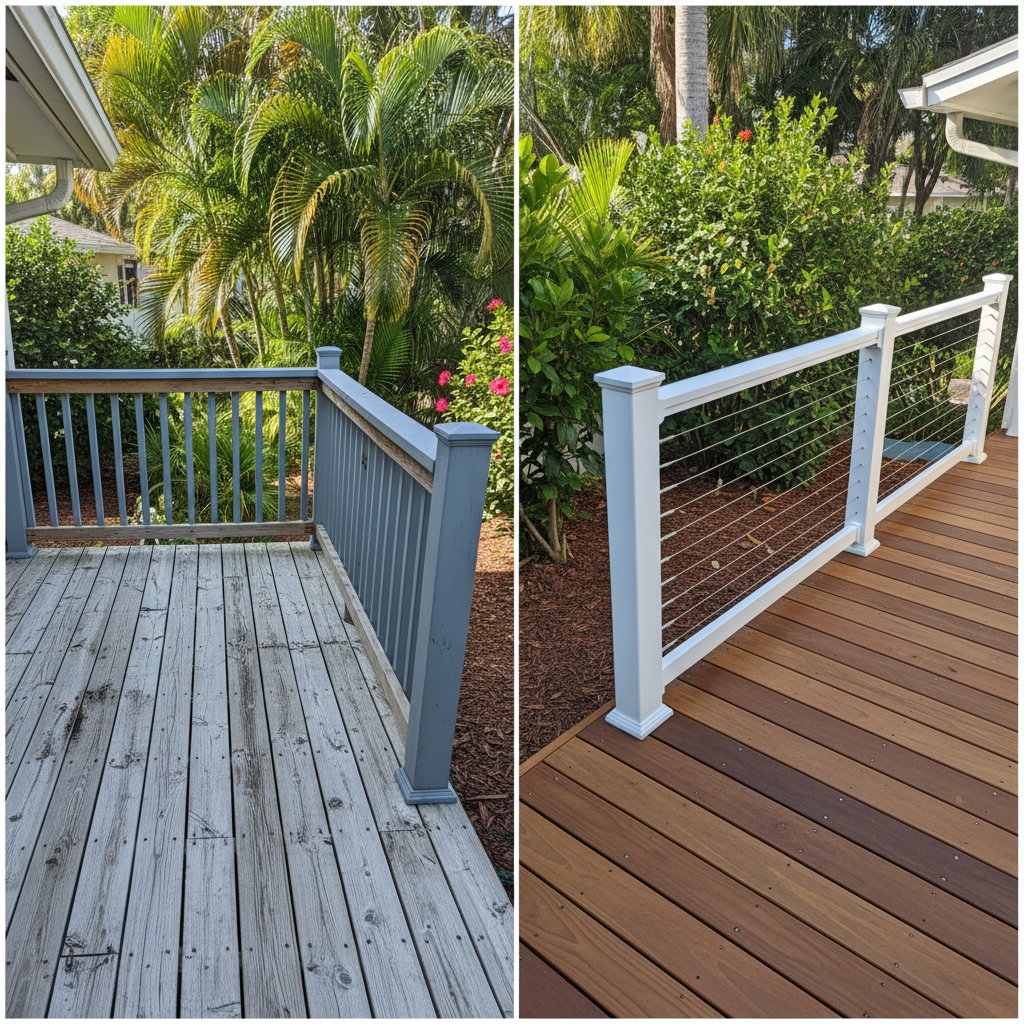
So, you're planning a new deck or maybe giving an old one a facelift here in West Palm Beach. You've probably thought about the deck boards, maybe even the color, but have you really dug into your railing options? It's not just about what material you pick – wood, composite, aluminum – but also how that railing gets installed. Most folks don't even realize there are two main ways to do it: post-to-post or over-the-post. Let's talk about what each means for your deck, especially with our Florida weather.
Post-to-Post Railing: The Classic Look
This is probably what you picture when you think of a deck railing. With post-to-post, your handrail runs between the structural posts. Think of it like a fence where the top rail connects directly to the side of each post. The posts themselves usually extend above the top rail, and you'll often see a decorative cap on top of each post.
Pros of Post-to-Post:
Cost-Effective: Generally, this method is a bit easier and quicker to install, which can save you some money on labor. The materials can also be simpler, especially if you're going with standard wood or composite.
Versatility: You've got a ton of design options here. You can choose different baluster styles, add decorative post caps, or even incorporate lighting into the posts. It's really flexible.
Easier Repairs: If one section of railing gets damaged, it's often easier to replace just that section without affecting the entire run, since each section is self-contained between posts.
Cons of Post-to-Post:
Visual Interruption: Because the posts stick up higher than the handrail, it can break up the visual line of your deck. Some people don't mind it, but others prefer a smoother look.
Potential for Water Traps: Where the rail meets the post, you can sometimes get little nooks and crannies that hold water. In our humid West Palm climate, that means more potential for rot with wood or mildew with other materials if not properly sealed or maintained.
Over-the-Post Railing: The Continuous Flow
Now, over-the-post is a different animal. With this style, the handrail actually runs over the top of the structural posts, creating a continuous, uninterrupted line. The posts still provide the support, but they don't stick up above the handrail. Instead, the rail itself forms the top surface.
Pros of Over-the-Post:
Sleek Appearance: This is the big one for most people. It gives your deck a really clean, modern, and continuous look. That unbroken line can make your deck feel bigger and more open, which is great for enjoying those ocean breezes.
Smoother Surface: Since the rail runs continuously, there are fewer places for debris, leaves, or standing water to collect. This can be a real plus in our tropical storms and general humidity.
Sturdy Feel: Because the rail is often a more substantial piece running over the posts, it can feel incredibly solid and robust. You'll notice it when you lean on it.
Cons of Over-the-Post:
Higher Cost: This method usually requires more specialized materials and a bit more skill to install correctly. The continuous rail sections can be longer and heavier, and getting those seamless transitions takes time. So, expect to pay a bit more for both materials and labor.
Less Design Flexibility: While it looks great, you're a bit more limited in adding decorative post caps or other embellishments that rely on the posts extending above the rail.
More Complex Repairs: If a section of that continuous rail gets damaged, it can be a bigger job to repair or replace it without affecting the adjacent sections.
My Recommendation for West Palm Beach Homeowners
Alright, so which one should you go with? If you're on a tighter budget and love that traditional, classic deck look, post-to-post is a perfectly fine option. Just make sure you're diligent with maintenance, especially if you're using wood. Those post-to-rail connections need to be sealed well to prevent water intrusion, which is a constant battle in our climate, especially in areas like the Intracoastal Waterway where salt air is a factor.
However, if your budget allows for it, I almost always lean towards over-the-post railing for West Palm Beach decks. Here's why:
Durability in Florida: That continuous, uninterrupted top rail means fewer places for water to sit and fewer joints to worry about failing over time. This is a huge advantage when you're dealing with our heavy rains, humidity, and intense sun.
Low Maintenance: Less water pooling means less mildew, less rot (if wood), and generally less upkeep. You want to be enjoying your deck, not constantly cleaning or repairing it.
Modern Aesthetic: The clean lines just look fantastic, especially with the modern architectural styles we see so much of around here. It really elevates the overall feel of your outdoor living space.
When we're building decks at All State Decks West Palm Beach, we've seen firsthand how well over-the-post holds up and how much our clients love the look. It's an investment, for sure, but it pays off in longevity and curb appeal.
No matter which way you go, make sure you're working with a contractor who understands the specifics of building for our Florida conditions. The right installation makes all the difference.